Category: conservation

  • When creativity and conservation come together

    I have heard it said by many that conservation is not a hobby or something people take lightly. Rather, conservation is a way of life. A passion. I could not agree more with these statements. Over the years it has become very clear to me that conservation is something Dylan is very passionate about. While my viewpoints are obviously shared and discussed with him, he makes his own decisions about where he will focus his conservation efforts and ultimately his fundraising. In the past, the choice was not always an easy one to make, but it was fairly cut and dry with large goals of $1,000. Tigers, then leopards, then rhinos. As soon as one project was completed, he was ready to move on to the next. Throw in the occasional symbolic animal adoption and that was our life.

    As Dylan continues to grow, so do his dreams of saving endangered species and changing the world. One project at a time just won’t do anymore. There are too many endangered species out there that Dylan wants to help. We needed to come up with a plan, so over summer vacation we brainstormed. We listed all the programs that we wanted to support in the next year or two and started coming up with ideas. Ideas of how we could raise the money without asking friends and family for donations. Dylan thought it would be good to sell something instead of only asking for money. I agreed.

    When creativity and conservation come together you get Creations4Wildlife. Inspired by the endangered species that we want to help save, we have designed several bracelets that we are selling as a way to raise funds to support our conservation efforts.

    Each piece of the collection is handcrafted by me and Dylan and the profits will be donated to the designated non-profit organization. We are currently raising money for the Tiger Conservation Campaign, International Rhino Foundation, Rhino Rescue Center, Giraffe Conservation Foundation, and Red Panda Network. Every purchase gives Hope that these endangered species can be saved.

    Working together on this new conservation project with Dylan has reminded me how important it is to never lose faith in your beliefs. No matter what the obstacles may be, another poaching story in the news or hearing that there are now only 4 northern white rhinos left, you just keep going.  Conservation is a way of life for us and I am confident that we can raise the funds and meet our goals. No question about it, this mother and son team are determined to make a difference for wildlife.

    To purchase one of bracelets please visit Creations4Wildlife.com
    Thank you for helping support our conservation efforts!
  • The Compassion and Determination of a Child

    There are times when Dylan makes me proud and then there are times when he leaves me speechless. Like when he writes something for a school assignment that brings tears to my eyes.Today was one of those times.

    Dylan


    I am compassionate and determined
    I wonder will poaching ever stop
    I hear animal calls
    I see me saving animals
    I want to stop all poaching
    I am compassionate and determined


    I pretend animals will always live in peace
    I feel for animals losses
    I touch the hands of many future conservationists
    I worry poaching may never stop
    I cry for the animals faced with poachers
    I am compassionate and determined


    I understand I’m going against the odds
    I say I’m doing what’s right
    I dream of a better world
    I try to stop the madness
    I hope I will reach my goals
    I am compassionate and determined


    “I am”

    By: Dylan Fryer, age 11


  • 5 Simple Ways to Help Your Local Zoo or Aquarium

    Spending the day at your local zoo or aquarium is a wonderful way to learn more about animals and the conservation efforts being made to ensure these animals are around for future generations. No matter how often you visit the animals, there is always something new to learn about them. Zoos and aquariums have so much to offer –  listening to fascinating keeper talks, seeing a new fact on an exhibit sign, or reading about progress made on a conservation issue.

    Most zoos and aquariums are non-profit organizations and depend on us, the general public, to keep the doors open. Everything we purchase, whether it be admission tickets, food, or a stuffed animal, is helping to give the animals the best care possible. There are so many ways that you can make a difference and help, but not everyone knows how or where to start. 
    Here are few simple things you can do to help your local zoo or aquarium:
    1. Get a membership. Instead of just buying a ticket for the day, why not buy a ticket for the entire year? Annual memberships are often the lifeblood of these organizations. If animal conservation is something you feel strongly about, why not upgrade from the basic membership? Check with your local zoo or aquarium and see what types of membership options are available. 
    2. Adopt an animal. Most animal adoptions start at only $25 and make great gifts for birthdays and holidays. Animal adoption can be done through the mail, or from my experience, many offer digital adoption certificates. This makes it very convenient when adopting an animal for someone who lives out of the area. 
    3. Give your change. That’s right, give away all those loose coins that get lost in the bottom of your purse. You would be amazed at how fast those add up and every little bit helps! Next time you visit, look around for a donation spot by the exit or near your favorite animal exhibit.
    4. Support them online. Nine times out of ten, your favorite zoo or aquarium is on social media. Facebook, Twitter, Instagram, YouTube, Tumbler … do a search and start following them, spread the word. Sharing a post or a picture goes a long way. You probably aren’t the only one who thinks that baby panda is adorable!
    5. Think globally. Many zoos and aquariums are a small piece in a very big puzzle working together to end extinction. Do your research and check out their website. I bet your local zoo or aquarium is affiliated with a much larger global organization that could use your help too. For example, the Tiger Conservation Campaign was started by the Minnesota Zoo, but is supported by many other zoos.   
    Whatever you decide to do, know that you are making a difference for the animals. 
  • How Today’s Children Are Making a Difference for Tomorrow

    I have often heard it said that we are preserving the world for future generations. That what we do today, will in fact, have an impact on our children and grandchildren. 
    Sounds good, right? 
    Well, I’m not so sure anymore.

    Are we really doing the changing or is it our children?

    Who is preserving the world for who?

    I read about it almost every day now. I see more and more stories of children making a difference; children doing something that makes me want to do more. Just the other day I read about Landon Clark, a 10-year-old boy in Oregon, who collected change in his coin jar to help save the orangutans. Landon raised $164.07 for the Oregon Zoo Foundation; but more importantly, he created awareness about the palm oil crisis in his community. This is a child teaching other children and adults about making a difference.

    Children in Nepal are working with the Red Panda Network to help save the endangered red panda. A group of sixth grade students know that red pandas live in the jungle near their village, yet many of the children have never seen one. Again, a story of school children making a difference for conservation and fighting to end extinction.

    The dictionary defines the word environmentalist as “any person who advocates or works to protect the air, water, animals, plants, and other natural resources from pollution or its effects”  – What I see today are young environmentalists. What our parents may have called hippies or tree-huggers 40 years ago, are today, what we call wildlife heroes.

    Could today’s children be the new generation of “hippies”? Making a stand for the earth to come before big business, a stand for what they believe is important? If so, who are their teachers?

    I do not consider my parents environmentalists and I do not remember talking about endangered species or climate change at the dinner table. However, these are the exact topics that my son and I talk about every day. Am I part of the generation gap?

    Could my generation be the teachers? If so, who taught us? Was it the uncle who everyone called the hippie because he went to Berkeley and had long hair? Was it the friend who loved nature and photography? Or was it just me who loved the ocean and grew up wanting to save the dolphins?

    Is this a cycle that repeats itself every other generation? Like a wheel that keeps turning, only to get stronger and faster with time.

    I know that I influence my son and his passion for wildlife. I support his choices and encourage him to keep making a difference in the world. He is only 11, but just like the other children his actions are creating awareness and making a difference. These children are preserving the world for us just as much as they are preserving it for future generations.

    Our children might just be the ones having the impact on us. What do you think?

    We do not inherit the Earth from our Ancestors; we borrow it from our Children.

  • 10 Reasons for Hope for the Future of Wildlife

    Two years ago Dylan and I joined the fight to end extinction. Even though it can feel like an uphill battle most of the time, we keep holding out for a small victory. A glimmer of hope. A success story. The birth of an endangered species or the reintroduction of a species into the wild.  Something to let us know that we are making progress.

    “Today we are facing an extinction crisis, with species disappearing every day,” said Douglas Myers, chief executive officer and president for San Diego Zoo Global. “To combat this crisis we needed an audacious mission that focuses our efforts toward creating successful outcomes, even if we have to do it by saving one species at a time.”

    San Diego Zoo Global has more than 132 conservation projects in 62 countries around the world and has reintroduced more than 43 species back into the wild during its almost 100-year history. This is progress! Working together, we can create awareness and make a difference.

    In honor of Endangered Species Day, which was last Friday, May 16, San Diego Zoo Global released a list of success stories in the conservation of endangered species. Bringing species back from the brink of extinction is the goal and in my opinion, nobody does it better than San Diego Zoo Global.

    The Ten Reasons for Hope are listed as follows:

    1) Mountain yellow-legged frog recovered after wildfires. In 2002, fewer than 200 mountain yellow-legged frogs were left in the streams of Southern California’s mountains. Four years later, a group of tadpoles was rescued from fire-damaged habitat and brought to the San Diego Zoo Institute for Conservation Research. A team from San Diego Zoo Global, the U.S. Fish and Wildlife Service and the U.S. Geological Survey, U.S. Forest Service and California Department of Fish and Wildlife worked together to reintroduce and reestablish a wild population in the San Jacinto Mountains. Reintroduced males are now beginning to show signs of breeding behavior and scientists hope to see wild-hatched frogs in this area for the first time in 20 years.

    Mountain yellow-legged frog

    2) Giant pandas less rare than before. Not long ago, the future for the giant panda looked grim. Today, the captive population of pandas has reached the milestone of 300 bears, the minimum necessary to sustain 97 percent of the genetic diversity for the next 100 years. With wild populations stabilizing and even increasing, the giant panda may now be close to having its status changed from endangered to threatened.
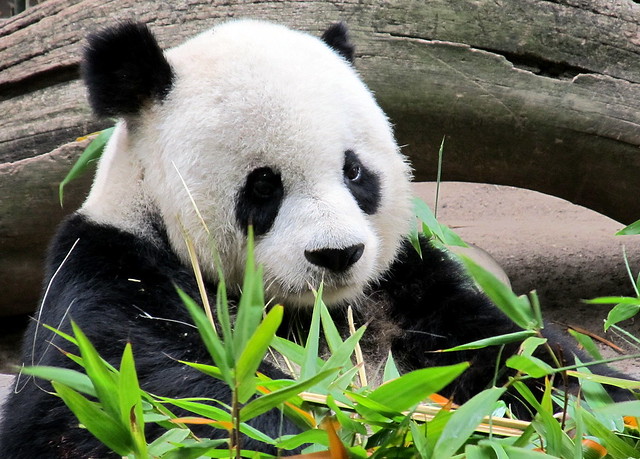
    Gao Gao

    3) Tecate cypress preserved for the future. San Diego Zoo Global partnered with The Nature Conservancy, the Bureau of Land Management, and the California Department of Fish and Wildlife to preserve the Tecate cypress, a conifer found in Southern California and parts of Baja California, Mexico. Numbers of this noble tree have declined rapidly in the past decade. Plant ecologists collected seeds from one of the last remaining cypress stands in California and established a nursery to produce seedlings. Some of the seeds were frozen and placed in the Native Plant Gene Bank at the San Diego Zoo Safari Park, protecting the species from loss by wildfires in the future.

    4) Tasmanian devil population protected from devastating disease. A deadly and contagious cancer called devil tumor facial disease has been wiping out entire populations of Tasmanian devils in the wild. Working with the Save the Tasmanian Devil Program, San Diego Zoo Global experts are helping to monitor healthy populations isolated from the disease so that the species can be recovered.

    5) Wild-hatched condors now in Baja California, Mexico. Overall, the California Condor Recovery Porgram now produces 12 to 15 chicks produced annually in the wild. Combined with birds raised in managed care, over 50 condors join the species count each year. In Baja California, Mexico, where San Diego Zoo Global is leading the recovery effort, the first released condors have become parents, with two chicks successfully fledged last year. As more wild condors transfer to natural foods and lead poisoning becomes better controlled, a full recovery of this iconic species could be achieved over the next decade.
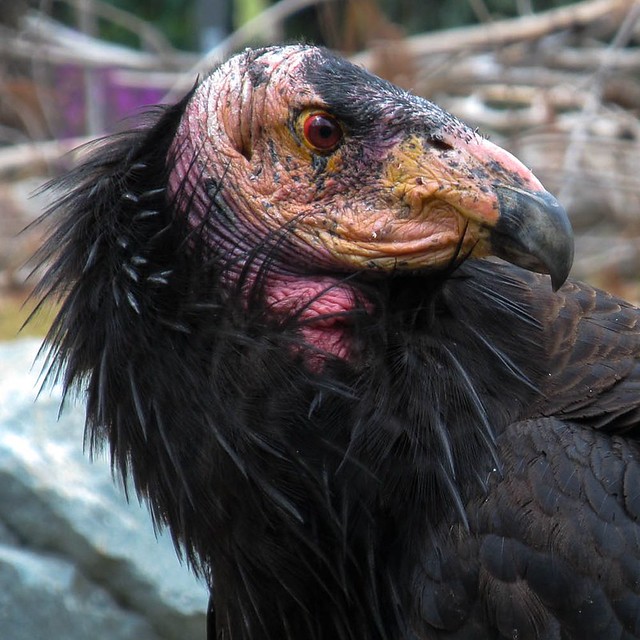
    California condor

    6) Baby pocket mice born. In an emergency rescue effort, 22 Pacific pocket mice founders were brought to the Safari Park in the summer of 2012. Housed and monitored at an off-exhibit area, this endangered species, an important seed disperser in its habitat, bred for the first time in 2013 and produced 16 offspring, which are now part of this year’s breeding efforts. Eventually, these young mice will be released into coastal habitat to bolster the remaining wild population.

    7) Island iguana population booms. Twenty years ago, Anegada iguanas were declining and in serious danger of extinction due to the heavy predation of juvenile iguanas by feral cats. Scientists from the San Diego Zoo Institute for Conservation Research partnered with the Fort Worth Zoo and the British Virgin Islands National Parks Trust in 1997 to begin raising hatchlings on Anegada Island until the juveniles were large enough to survive in the wild. To date, 179 “headstarted” iguanas have been released on Anegada Island, nearly doubling the size of the wild population.
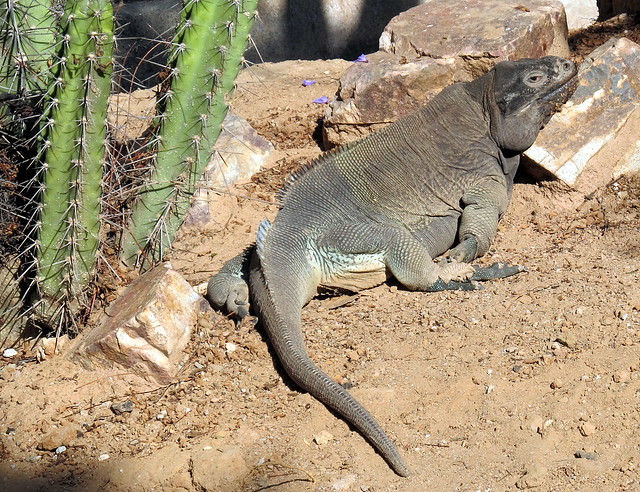
    Critically endangered Anegada Ground Iguana

    8) Gorillas protected in the wild. Ebo gorillas were identified in 2002 by San Diego Zoo Global researchers in Cameroon’s Ebo forest. Numbering less than 25 animals, the gorillas are isolated from the 2 currently recognized western gorilla subspecies and may represent a unique form of gorilla. In 2012, the San Diego Zoo’s Central Africa Program established the Clubs des Amis des Gorilles (Gorilla Guardian Clubs) in two villages located less than two miles from the gorillas’ habitat. The groups actively work to monitor and protect the rare population.

    9) First captive breeding of mangrove finch. The mangrove finch is the most threatened bird in the Galápagos Islands. Threats to the remaining 60 to 80 birds include introduced rats, cats, and disease, with the grimmest hazard being botfly larvae, which infest nests, overtaking and eventually killing chicks. San Diego Zoo Global is partnering with the Charles Darwin Foundation and the Galápagos National Park to employ hands-on techniques to nurture eggs and then chicks until they are large enough to avoid botfly infestations. To date, 15 chicks have been raised and transferred back to a release aviary within the mangrove forest on Isabela Island.

    10) Rare Hawaiian bird ready for reintroduction. In 1994, the alala (or Hawaiian crow) population dipped to just 20 birds and the species is extinct in the wild. San Diego Zoo Global’s Hawaii Endangered Bird Conservation Program has been working with the U.S. Fish and Wildlife Service and the Hawaii Division of Forestry and Wildlife to turn the tide for this last corvid in the Hawaiian Islands. Thanks to the successful breeding program at our Keauhou and Maui Bird Conservation Centers, the alala population has now increased to 108 birds. There is now the possibility of releasing alala back into the wild in coming years.

    The next time I read about a rhino poaching or a habitat that is being destroyed, I will remind myself of these successes. No matter how hard the fight, the important thing is to keep fighting; because eventually there will be another reason for hope.
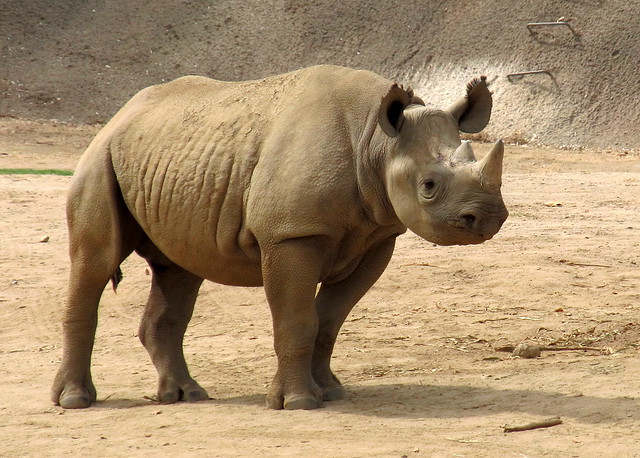
    Baby Black Rhino
    Two-year-old Black Rhino, Erik – 2012
  • Our visit with Dr. Ryder – Part 2

    Over the past few years I have become more involved with the Wildlife Conservancy, special projects at the San Diego Zoo and Safari Park, and various philanthropic ventures with Dylan. Each donor event I went to, I learned more. Each zookeeper I met, I learned more. Each scientist and researcher I met, I learned more. However, nothing could have prepared me for what I would learn about San Diego Zoo Global during my visit to the Beckman Center for Conservation Research. I am in awe of the diversity and amount of conservation work that makes up what is the largest zoo-based, multidisciplinary research facility in the world.

    This is my story.

    To start with, I can’t even begin to explain the pride I felt when I received the phone call inviting Dylan to visit the Beckman Center for Conservation Research and meet Dr. Oliver Ryder. My child was going to meet a world-renowned scientist who had a passion similar to his about saving the Northern White Rhinos. Not only was he going to meet him, but he was going to see the Frozen Zoo we have read so much about.

    As we drove through the entrance gates, I could feel the excitement in both of us escalating. Just as our itinerary had said, there was an orange cone reserving a parking spot right in front for the Fryer Family. Was this really happening? I felt anxious walking through the double glass doors, yet at the same time I felt right at home. Like this is where I was suppose to be.

    We were met by Maggie, who would be our guide for the afternoon, and after formal introductions we were on our way. The nerves had settled and I just tried to take it all in. Everything around me was inspiring. From the signs in the window listing Dr. Beckman’s Seven Rules for Success to the bronze plaque depicting the mission statement of the Institute, to the polished concrete floors. Lights were turned off in the labs to conserve energy, but it was hardly noticeable with all of the natural daylight coming through the windows. Renewable resources like bamboo are found throughout the building on railings, ceiling arches, and benches. Talk about being “green” … this was a “green girls” heaven on earth.

    Watching Dylan meet Dr. Ryder was something I will never forget. He went into starstruck mode for about the first 10 minutes and then I noticed something familiar. Dylan’s tone of voice changed. He was in his element. He was carrying on conversations with Dr. Ryder just like he does with Rick Schwartz. All I could do was sit back and watch with great pride.

    Something that I found really interesting is that they keep a handwritten log of all specimens brought in. Those leather-bound books you see on the shelves are all logs. Dr. Ryder asked Dylan when his birthday was to see what specimens they collected the day he was born, but nothing showed up. Strange right? Well, not if you were born on a Sunday. So we looked at the following day and saw Thomson’s Gazelle. These books even dated back to my birthday!

    The Frozen Zoo was just incredible. They have DNA from plants and animals all over the world – Over 10,000 irreplaceable samples, which represent over 1,200 species and subspecies.

    Talk about an extensive collection … just look inside this fridge! There are vials containing DNA from every California Condor ever hatched at the San Diego Zoo Safari Park and of course the Northern White Rhinos – all 7 of the remaining species, plus the DNA of those that have passed away.  So much can be learned from DNA. Science truly is amazing and an integral part of saving endangered species.

    After visiting the Frozen Zoo and the Genetics Lab, we went into Dr. Ryder’s office where we sat talking about his work with the Northern White Rhinos. You know, no big deal. Just two ordinary people talking with a world-renowned scientist. Somebody pinch me.

    We thanked Dr. Ryder for his time and continued touring the building. So much to take in. I had to keep reminding myself to take pictures. Of course, after the fact, I realized I should have taken some video clips.

    The Beckman Center for Conservation Research is nearly 50,000 square feet and includes specialty labs and equipment that enable the scientists to continue critical conservation research on behalf of endangered species and habitats worldwide.

    The mountain yellow-legged frog was nearly wiped out by the chytrid fungus; but thanks to the hard work and research of these scientists, 465 captive-born mountain yellow-legged frogs were released into the wild in Southern California. Now that is what I call a conservation success story!

    Although the labs were inspiring, my favorite stop was in the library. Not just for the extensive collection of books, or because Dylan was invited to come back anytime he needed to do research, but because of something I saw in a small room.

    The original desk of Dr. Harry Wegeforth, Founder of the San Diego Zoo. This is where it all started. One man’s dream to start a zoo in San Diego – I believe Harry would be proud of what his zoo has become. While this may seem trite to you, it was a very emotional moment for me.

    The first half of our tour was now over and it was time to head out to the Safari Park on a cart to look for the elusive Northern White Rhino, Nola. She is old and one of the last seven remaining in the world of her species. We spent over an hour driving around the field exhibits and had so many wonderful encounters. It was getting cold and dark. The park was closing and still no Nola. Then, far across the field, we spotted her. Isn’t she beautiful?

    I still can’t even wrap my head around everything that goes on at the Beckman Center for Conservation Research. Nor can I even begin to thank those involved with our visit that day. Words just can’t express how wonderful this experience was for both myself and Dylan.

    One thing I am sure of though is the next time someone says to me, “You’re going to the zoo again?” I will simply reply with, “The San Diego Zoo is so much more than just a zoo!”

    To see more pictures of the labs, Frozen Zoo, and animals we encountered, you can view the Dr. Ryder and the Frozen Zoo Flickr album.

    In case you missed Dylan’s story, you can read it here.

  • Dr. Ryder and the Frozen Zoo

    A few months ago Dylan was invited to tour the Beckman Center for Conservation Research and meet Dr. Oliver Ryder to learn about his extensive genetics and DNA work with the Northern White Rhinos. The anticipation and excitement for this visit was nothing compared to the feeling we both had when we walked through the front doors of the Institute on January 8, 2014.


    Knowing that we both walked away from this amazing experience with our own highlights and favorite moments, I thought it would be nice for each of us to share our own stories. 


    This is Dylan’s story.


    Visiting the Beckman Center for Conservation Research was the best time of my life. When I got there the first thing I could say was, “Wow, I’m really at the Beckman Center.” – Then when I got inside I saw stuff like pictures of animals that were extinct like the quagga. A fun lady named Maggie met us and gave us the tour. We got to talk to a really cool guy named Dr. Oliver Ryder (or Ollie if he’s your friend). Dr. Ryder is a world renowned scientist who first discovered through genetic research that northern and southern white rhinos are different. I also saw many different types of DNA from different animals such as southern white rhinos, gorillas, condors and much much more. 


    My favorite part of my tour was when I got to go in the Frozen Zoo. In the Frozen Zoo Dr. Ryder showed me all the frozen cells. The frozen cells are frozen by liquid nitrogen and I couldn’t touch them because it was so cold that it would cause severe tissue damage. Dr. Ryder had to use a special thermal glove to pick the cells up.


    Then we went to Dr. Ryder’s office and I learned a lot about northern white rhinos. It turns out that Dr. Ryder has seen all of the remaining 7 northern white rhinos! He also told me that he had a conservation plan to help save northern white rhinos. I thought his plan was very interesting.


    We got to see all the labs too. In one of the labs I saw Mountain yellow-legged frogs. They are critically endangered and I got to see them as tadpoles, polliwogs, and adults. Another part I really liked was when I walked by a scientist they would say, “Hey, you’re Dylan!” In the Beckman Center I also got to go in a really cool library that only had animal books in it. 


    All in all, my experience at the Frozen Zoo and Beckman Center for Conservation Research was totally awesome!


    Part 2 (my story) will be published tomorrow.


  • The Adventure Continues …

    We had so much fun sharing our love of animals with kids last summer that we wanted to continue our journey of teaching others about endangered species and conservation.

    We’ve been busy planning some exciting things since hosting Dylan’s Animal Adventure Camp last summer and it’s almost time to share our next journey with you. This is an adventure that you won’t want to miss!

  • The Magnificent Bald Eagle

    Creating awareness about these beautiful birds has played a major role in bringing the Bald Eagle, the US National Bird, back from the brink of extinction. 

    The Bald Eagle is no longer listed on the endangered species list, but they are still protected under the Bald and Golden Eagle Protection Act.

    Once on the brink of extinction, the majestic bald eagle is now flourishing across the nation.
    A friend of mine was lucky enough to see one in the wild at Snoqualmie Falls, WA and captured this beautiful photograph.

    Photo by Randy Campbell
    To learn more about the Bald Eagle you can visit the U.S. Fish and Wildlife website. 
  • Animal Conservation and Philanthropy – It’s in the Family Crest

    If you ever had doubts concerning how much my family cares about animal conservation, what you are about to read will chase those doubts away. I am sure you have figured out that conservation is pretty much what makes the world go around for Dylan, but this … well this is something that even I didn’t see coming.

    Dylan had a homework assignment that he was to complete over the winter break. He had to create his own family coat of arms using symbols, animals, and colors from a sheet his teacher gave him. Each item gave a description or a meaning of what it stood for. Here is what Dylan created as our family coat of arms.

    Bear 
           Protectiveness


    Flaming Heart 
           Passion


    Blue 
           Loyalty


    Green 
           Hope and Joy


    Pelican 
           Devotion


    The words I understood. They seemed like wonderful words to describe our family and I was proud of what he chose. Being that he is so passionate about animal conservation, I was not surprised that he chose animals for two of his sections. It wasn’t until I read his explanation on the back of the poster board that I realized he had just created the perfect coat of arms for our family.

    “My coat of arms shows my families love for philanthropy. My blue and green checkerboard shows that my family keeps all of our promises to conservation; and our hope and joy for conservation. The bear shows our families protectiveness of all animals we come across. My pelican shows my families devotion to save animals near and far. My flaming heart shows our passion for anything wildlife related.”

    Like I said, you can remove all those doubts from your mind. Dylan has now put it in writing and created a family coat of arms that I am proud to display.

    We are a family that believes in conservation.

    We take pride in our philanthropy projects.

    We value our belief that through animal conservation and education we can help save endangered animals all around the world.

    Yes, this is the perfect coat of arms for our family. Excellent job Dylan!